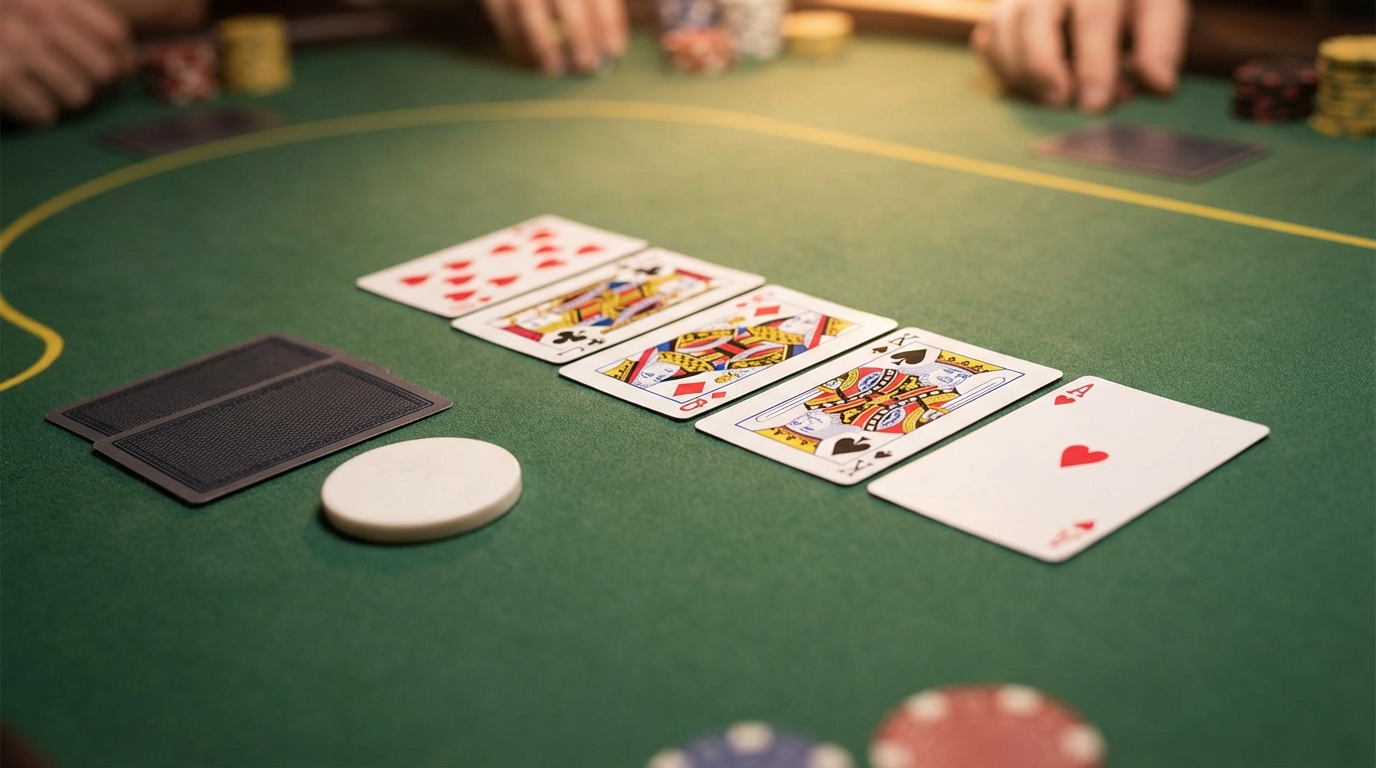
Texas Hold'em is the poker game you've seen on TV, in movies, and at every casino on the planet. It looks complicated from the outside. Chips flying, people staring each other down, someone shoves all in and the crowd loses it. But the basic rules take about ten minutes to learn.
What takes a lifetime is getting good at it. That's a different conversation. Right now, we're going to walk through exactly how a hand of Texas Hold'em works, step by step, so you can sit down at a table (or open an app) and actually know what's happening.
No jargon dumps. No "refer to section 4.2." Just the game, from the moment cards hit the felt to the moment someone rakes in the pot.
What you're trying to do
The goal in Texas Hold'em is simple: win chips. You win chips by winning pots. You win pots in one of two ways:
- Have the best five-card hand at showdown (when cards are revealed).
- Make everyone else fold before showdown so you take the pot uncontested.
That second option is why poker is poker and not just a card-flipping contest. You don't need the best hand to win. You need everyone else to think you have the best hand, or at least make them doubt theirs enough to give up. But first, you need to understand the mechanics.
The setup: dealer button and blinds
Before any cards are dealt, two players are forced to put money into the pot. These forced bets are called blinds, and they exist so there's always something worth fighting over. Without them, everyone could just sit around waiting for pocket Aces.
- Small blind — The player immediately to the left of the dealer button posts a smaller forced bet (typically half the big blind).
- Big blind — The player two seats left of the button posts the full forced bet. This sets the minimum bet size for the round.
The dealer button is a small disc that rotates clockwise around the table after each hand. It marks who "deals" (even if a professional dealer handles the cards). The button position matters because it determines who posts blinds and, more importantly, who acts first and last during betting rounds.
If you're playing a $1/$2 game, the small blind is $1, the big blind is $2, and the minimum bet or raise is $2. That's it for the setup. Now cards come out.
Step 1: You get two cards (hole cards)
Each player gets two cards face down. These are your hole cards, private cards that only you can see. You'll combine these two cards with five community cards (dealt later) to make the best possible five-card hand.
Your hole cards are everything
You only get two cards in Hold'em. That's it. Two. So which two you start with matters a lot. A pair of Aces is a monster. A 7-2 offsuit is garbage. Knowing which hands rank highest is the first skill you need.
Once everyone has their two cards, the first betting round begins.
Step 2: Pre-flop betting
Starting with the player to the left of the big blind, everyone gets a turn. You've got three choices:
- Fold and throw your cards away. Hand over, you're out. You lose nothing beyond any blinds you already posted.
- Call by matching the current bet (the big blind amount, or whatever someone has raised it to).
- Raise by increasing the bet. Now everyone else has to call your raise, re-raise, or fold.
Action moves clockwise. The big blind acts last pre-flop, which is one of the few times being in the blinds gives you a positional advantage. If nobody has raised, the big blind can simply "check" (stay in without adding money) since they've already posted.
Pre-flop is where most beginners blow it. They play way too many hands. You don't need to see every flop. Winning players fold most of their starting hands. It's boring, but it works. The other thing to learn early is how table position affects your decisions.
Step 3: The flop (three community cards)
After pre-flop betting wraps up, the dealer burns one card (places it face down, it's out of play) and deals three cards face up in the center of the table. These are the community cards. Every player at the table shares them.
Now you can see five of the seven total cards you'll have to work with (your two hole cards plus these three). This is where the hand starts taking shape. Maybe you flopped a pair. Maybe you picked up a draw. Maybe you have absolutely nothing.
A second betting round starts, beginning with the first active player to the left of the dealer button. Same options as before, plus one new one:
- Check if nobody has bet yet. You stay in without putting chips in.
- Bet to put chips into the pot.
- Call to match someone else's bet.
- Raise to increase someone else's bet.
- Fold to give up. Whatever you've already put in, you leave behind.
Step 4: The turn (fourth community card)
Another burn card, then one more community card dealt face up. Six of seven cards now visible. The turn can flip a hand on its head. A draw completes, a scary overcard shows up, or the board bricks out and nothing changes.
Another betting round, same rules as the flop. Bets tend to get bigger here because the pot has grown and people are more committed. If you're holding a weak hand, this is where it starts costing real money to stick around.
Step 5: The river (fifth and final community card)
One last burn, one last community card. All five community cards are now on the board. Your final hand is the best five-card combination you can make using any mix of your two hole cards and the five board cards.
One final betting round. After this, if two or more players remain, it's showdown time.
Step 6: The showdown
Remaining players flip their cards over. Best five-card poker hand takes the pot. If two players have the exact same hand, they split it.
The hand rankings from worst to best:
- High Card
- One Pair
- Two Pair
- Three of a Kind
- Straight
- Flush
- Full House
- Four of a Kind
- Straight Flush
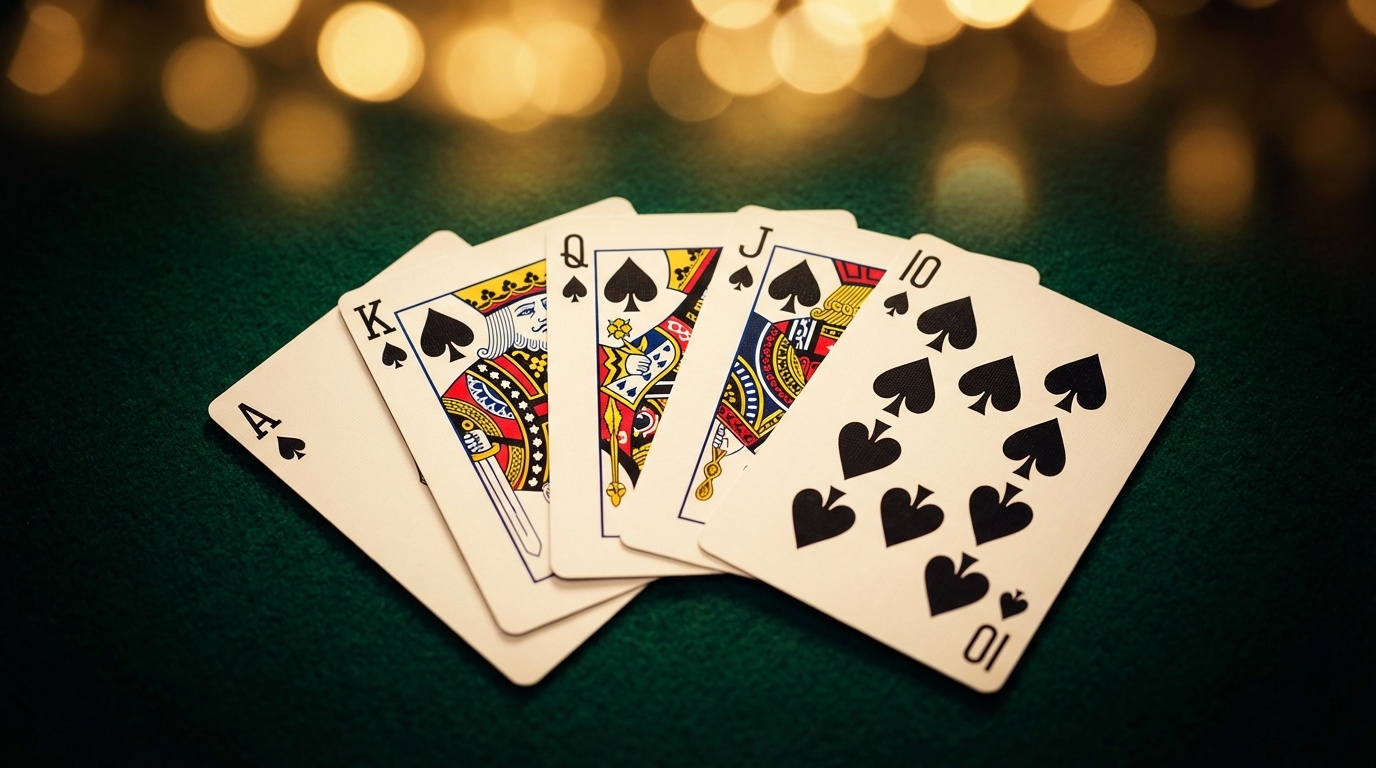
- Royal Flush
If you're fuzzy on any of these, read the complete hand rankings guide. You need to know these cold before playing for real money.
Putting a full hand together
Let's walk through a quick example with a $1/$2 blinds game. Six players at the table.
Blinds posted
Player 1 posts $1 (small blind). Player 2 posts $2 (big blind). Pot: $3.
Hole cards dealt
You're in seat 4 and look down at A♠ K♥. Strong starting hand.
Pre-flop action
Player 3 folds. You raise to $6. Players 5 and 6 fold. Small blind folds. Big blind calls. Pot: $13.
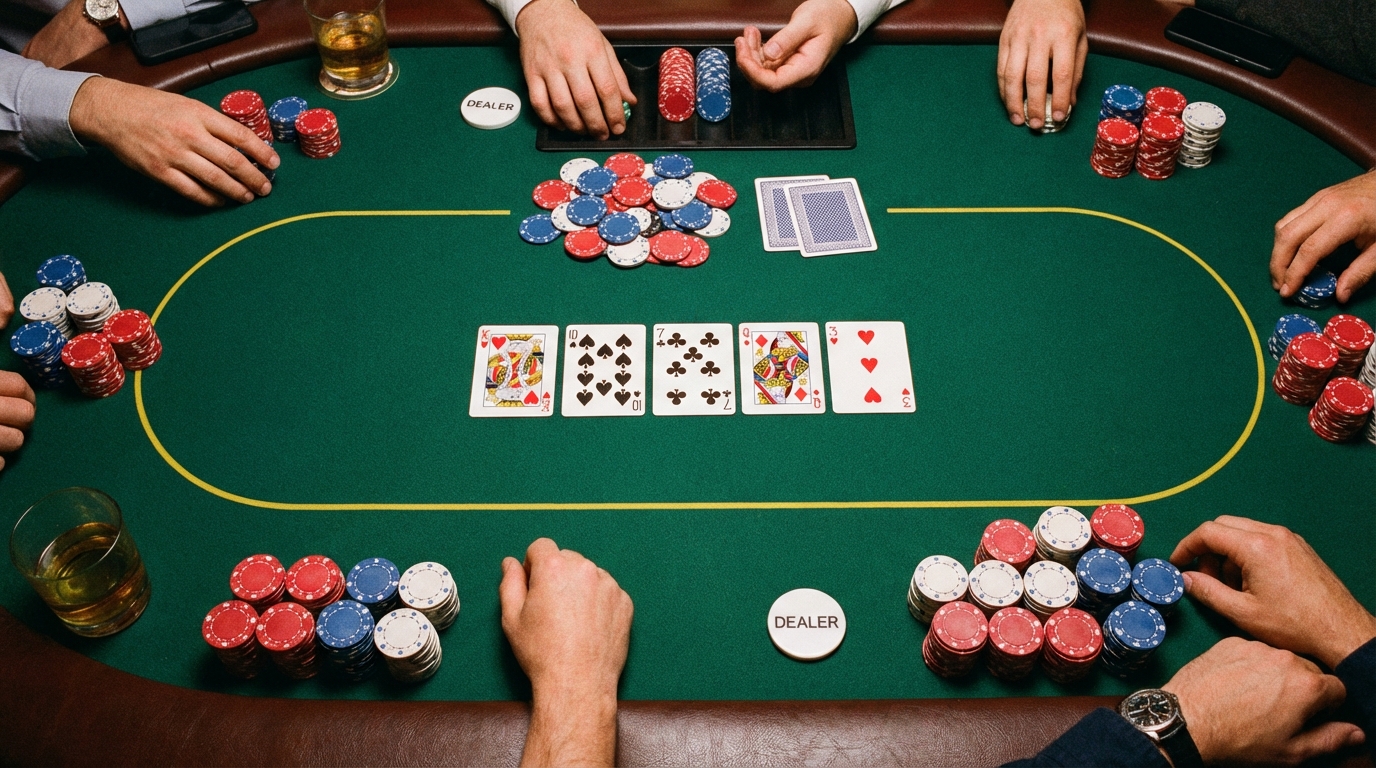
Flop: K♦ 7♠ 3♣
You flopped top pair with the best kicker. Big blind checks. You bet $8. Big blind calls. Pot: $29.
Turn: 10♥
Doesn't change much. Big blind checks again. You bet $18. Big blind calls. Pot: $65.
River: 2♦
Blank card. Big blind checks. You bet $30. Big blind folds. You win a $65 pot without showdown.
That's a complete hand. Notice the big blind never showed their cards. They folded, so you'll never know what they had. Maybe they had a pair of sevens and you had them crushed. Maybe they had nothing and were floating. Doesn't matter. You bet, they gave up, you won.
Rules that trip people up
You use any five of seven cards
Your final hand is the best five cards out of seven. You can use both your hole cards, just one, or even play the board entirely (use zero hole cards). It confuses people at first, but it comes up more often than you'd think.
Betting is capped in limit games
In No-Limit Hold'em (the most popular format), you can bet any amount up to all your chips at any time. In Limit Hold'em, bet sizes are fixed. Most casual games, home games, and tournaments are No-Limit.
The button moves every hand
The dealer button rotates clockwise after every hand, and the blinds move with it. Everyone takes turns paying them. Nobody gets permanently stuck subsidizing the table.
You can't bet more than you have
If someone bets more than your remaining chips, you can go "all in" for your full stack. You're eligible to win only the portion of the pot you could match. A side pot forms for the rest.
Mistakes you'll probably make
You're going to make these. Everyone does. Knowing about them won't fully prevent them, but at least you'll recognize what happened afterward.
The biggest one is playing too many hands. Folding is boring. Sitting there watching other people play while you wait for something decent feels like a waste of time. But good players fold 70-80% of their starting hands. Not every hand is worth your money.
The second is ignoring position. Where you sit relative to the dealer button changes everything. Acting last is a huge advantage because you get to see what everyone else does first. If you're one of the first to act, you need a stronger hand to justify playing.
Third: calling when you should fold. "I've already put money in" is the most expensive thought in poker. Those chips are gone. The only question is whether putting more in is worth it based on what's ahead of you, not behind you.
Also, bet sizing. New players bet too small when they have strong hands. A $2 bet into a $20 pot gives everyone at the table cheap odds to chase draws against you. If your hand is good, make people pay to try to beat it.
And finally, pay attention when you've folded. Watch what other people do. You'll start noticing patterns, and those patterns become money later.
Hold'em betting formats
Texas Hold'em comes in three flavors. Same game, same rules, just different limits on how much you can bet:
| Format | Betting Rule | Where You'll Find It |
|---|---|---|
| No-Limit | Bet any amount, anytime (min: big blind) | Most tournaments, cash games, WSOP |
| Pot-Limit | Max bet = current pot size | More common in Omaha than Hold'em |
| Fixed-Limit | Bet sizes predetermined per round | Some online rooms, older live games |
When people say "poker" in 2026, they almost always mean No-Limit Texas Hold'em. That's what the World Series of Poker Main Event is, what you'll find at most casinos, and what every major poker app defaults to.
Where to play your first hands
You know the rules now. What you need is reps. Here's where to get them without torching your savings.
Most online poker sites have play-money tables. Fair warning: the play-money games are terrible poker. People shove all in every hand because the chips are meaningless. But they're fine for getting the mechanics down. Practice posting blinds, reading the board, following the action.
Better yet, get some friends together for a home game. Grab a deck of cards and some cheap chips. Play for small stakes or nothing at all. Home games are the best place to learn because you can stop and ask "wait, whose turn is it?" without anyone getting annoyed.
When you're ready to play for real money, start at the lowest stakes you can find. $0.01/$0.02 tables exist on most sites. You can buy in for $2 and learn against other people who are also figuring it out.
What to learn next
You know how a hand works. Good. Now go play a bunch of them. Seriously, don't try to learn everything before you sit down. Play fifty or a hundred hands, get comfortable with the flow, then come back and start layering in strategy.
When you're ready, the logical next steps are: memorize the hand rankings until you don't have to think about them. Learn why table position matters so much. Figure out which starting hands are worth playing and which ones should go straight in the muck. Then get into pot odds, which is just the math behind whether a call makes you money long-term. It's less intimidating than it sounds.
Reading other players comes last because it takes real-world practice, not just reading articles. You'll start picking up on betting patterns and timing tells naturally as you play more. Give it time.